
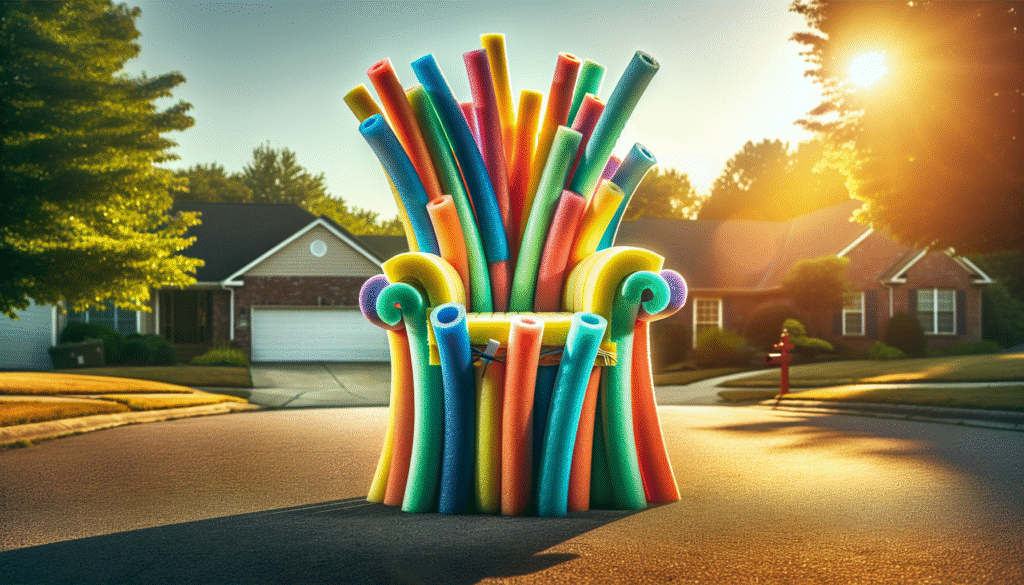
What would you do if you spotted a colorful throne made of pool noodles parked in the middle of a cul-de-sac and a man wearing a makeshift crown announcing himself king?
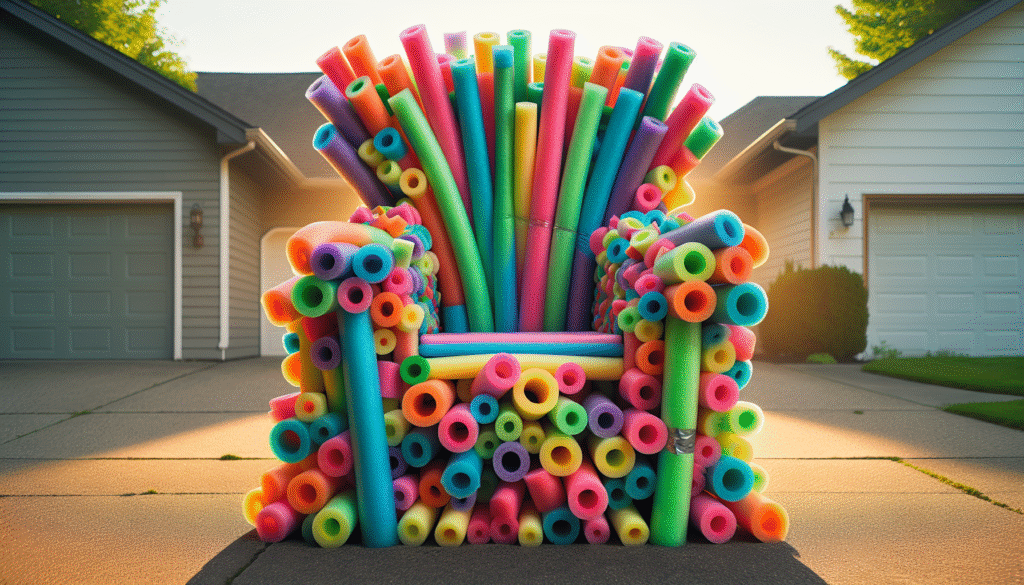
Florida Man Builds a Throne Out of Recycled Pool Noodles and Declares Himself King of the Cul-de-sac
You’ve probably seen quirky neighborhood moments before, but this one combines do-it-yourself creativity, upcycling, and a touch of performative community theater. In this article, you’ll learn how the project came together, what materials and steps were most important, safety and etiquette considerations, sustainability benefits, and how you could adapt the idea for your own block party or family project without causing friction with neighbors or local authorities.
Why this story matters to you
The image of a throne constructed from pool noodles isn’t just entertaining — it highlights how everyday objects can be repurposed into whimsical art, how one person’s playful act can become a local talking point, and how creativity intersects with community dynamics. You’ll gain practical takeaways whether you want to replicate the throne or simply understand the social and legal implications of similar neighborhood projects.
What happened: a short summary
A local resident in Florida collected recycled pool noodles and other household materials, engineered a makeshift throne, and staged a lighthearted proclamation declaring himself “King of the Cul-de-sac.” The scene drew neighbors, social media attention, and conversations about public space use, recycling, and neighborhood culture. You’ll find the details broken down below, including step-by-step building notes and guidance if you want to try something similar.
Key points at a glance
You’ll want a quick snapshot before getting into the details. This summary lists who was involved, what was made, and the main takeaways regarding safety and community response.
- Who: One local resident (self-styled “king”), neighbors, bystanders who stopped to watch.
- What: Throne constructed primarily from recycled pool noodles, reclaimed wood, zip ties, and fabric.
- Where: Cul-de-sac in a residential neighborhood in Florida.
- Why: A playful personal project that turned into a neighborhood spectacle.
- Outcome: Mixed responses—amusement, mild concern around safety, and generally positive social media engagement.
Materials used: a practical inventory
You’ll need to gather specific items if you plan to make a similar throne. Below is a table that organizes materials by category and purpose, so you can plan, budget, and substitute responsibly.
| Category | Item | Purpose / Notes |
|---|---|---|
| Structural | Plywood sheet, 2×4 lumber | Base platform and frame for load-bearing support |
| Pool noodles | Assorted colors | Primary visual material and padding — recycled where possible |
| Fasteners | Zip ties, screws, bolts | Hold noodles and panels in place |
| Adhesives | Hot glue, exterior-grade construction adhesive | Secure light-weight materials |
| Covering | Outdoor fabric, tarpaulin, foam padding | Weather protection and seat comfort |
| Wheels (optional) | Caster wheels or small dolly | Mobility for moving the throne |
| Decorative | Acrylic paint, faux jewels, rope | Visual finishing touches |
| Tools | Saw, drill, staple gun, measuring tape | Safe, correct construction tools |
| Safety | Gloves, goggles, reflective vest | Personal protective equipment while building and while on the street |
Tips for sourcing materials
You’ll save money and reduce waste by using recycled noodles from neighborhood pools, thrift stores, curbside pickups, or online community boards. Reclaimed wood and surplus hardware are good alternatives if new materials aren’t available or if you want to reduce environmental impact.
Design and engineering basics
You’ll want a design that balances whimsy with structural safety. Pool noodles are lightweight and not load-bearing, so the underlying frame and base must support the weight of the person (or people) who will sit on the throne.
Core design principles
- Build a strong base: Use a plywood platform supported by 2x4s to distribute weight.
- Use pool noodles for padding and aesthetics: They should be attached to the frame with fasteners or covering materials, not expected to carry load.
- Ensure stability: Add outriggers or a wide footprint to prevent tipping, especially in a public street where children might climb.
- Consider mobility: If you want to move the throne, design secure wheel attachments rated for the expected load.
Simple load calculation (practical approach)
You don’t need to be an engineer, but you should make a conservative estimate:
- Assume maximum seated weight (e.g., 300–500 lb / 136–227 kg if more than one adult may sit).
- Use a plywood base at least 3/4″ thick and appropriate supports under the plywood spaced no more than 16″ apart.
- Choose hardware (screws, brackets) rated for outdoor use and structural loads.
If you’re uncertain, consult a knowledgeable friend, a local maker space, or a professional to review your frame design before anyone uses the throne.
Step-by-step construction guide
You’ll appreciate a clear sequence of steps to follow. Below is a practical build process broken into planning, construction, assembly, finishing, and setup.
Planning stage
Planning keeps the project manageable and safe.
- Decide on dimensions: Typical throne seat about 18–20″ high, seat width 20–24″, and a tall backrest for visual impact (3–4 ft).
- Verify location rules: Check local ordinances for placing objects in a cul-de-sac or on public roads (see legal/etiquette section).
- Gather your team: A second person helps with lifting, assembly, and safety monitoring.
- Prepare permits or notices: If you plan a public event, notify your homeowner association (HOA) or local municipality, if required.
Construction stage: base and frame
Build the supportive skeleton first.
- Cut plywood for the base: Use a 3/4″ plywood sheet cut to desired throne footprint.
- Build a 2×4 frame: Create a rectangular frame under the plywood with cross-braces for load distribution.
- Attach the plywood: Secure with screws into the 2×4 frame.
- Add runners or outriggers: Attach additional 2x4s at the edges to widen the base if needed for stability.
Construction stage: backrest and armrests
You’ll want a visually impressive backrest that also stays lightweight.
- Build a wooden backboard: Use thinner plywood (1/2″) attached to a 2×4 frame that rises from the base. Reinforce with diagonal braces.
- Attach armrests: Create simple armrests from 2x4s or reclaimed pieces, covered later with padding.
- Ensure secure attachment: Use heavy-duty screws or bolts and check all joints.
Cladding with pool noodles
Now you add the recycled flair that gives the throne personality.
- Prepare pool noodles: Cut to length and, if necessary, join segments using PVC pipe sleeves or heavy-duty tape.
- Attach with zip ties and adhesive: Fasten the noodles to the frame with zip ties and a dab of hot glue or construction adhesive for added security.
- Create patterns: You can spiral noodles around the backboard, create a scalloped edge, or build layered effects for visual depth.
- Cover seams: Use outdoor fabric and a staple gun to hide fasteners and add a cohesive look.
Finishing touches
A few decorative choices make the throne memorable.
- Paint and embellish: Use acrylic paint on wooden parts and add faux jewels or rope as decorative trim.
- Seat cushioning: Add foam padding and a waterproof fabric cover to make sitting comfortable.
- Anchor points: Install discreet tie-down points if you will place the throne in windy conditions or where it might be jostled.
Assembly and testing
You’ll need to verify the throne is safe before anyone sits on it.
- Inspect fasteners and joints: Tighten any loose screws and confirm zip ties and adhesives are holding.
- Load test carefully: Apply gradual weight — sit on the edge first, then on the center. Observe for deflection or wobble.
- Adjust as needed: Add reinforcement if any instability occurs.
Safety checklist
You’ll want to minimize risk to yourself and neighbors. Below is a table summarizing common safety considerations.
| Risk | Preventive action |
|---|---|
| Tip-over | Widen base, add outriggers, avoid tall skinny profiles |
| Structural failure | Use quality lumber, proper fasteners, test load limits |
| Sharp edges | Sand and cover exposed wood or metal |
| Fire hazard | Keep adhesives and decorations away from ignition sources |
| Weather damage | Use exterior-grade materials and temporarily remove fabric in storms |
| Traffic hazard | Avoid placing on active roadway; if on cul-de-sac, notify neighbors and ensure visibility |
| Child safety | Supervise children, anchor the throne, avoid small detachable parts |
Personal protective equipment (PPE)
You’ll reduce the chance of injury during construction by wearing gloves, goggles, and closed-toe shoes. Use ear protection if you operate loud power tools.
Legal, civic, and neighborhood etiquette
You’ll probably want to know whether you can place such an installation in a cul-de-sac. Legal and social considerations are key to keeping the project fun and low-friction.
Know the rules
- Public vs. private property: Cul-de-sacs are often public right-of-way. Placing large objects on public property can violate municipal codes.
- HOA restrictions: Homeowner associations may have rules about decorations, structures, and public displays.
- Permits for events: A public gathering centered around the throne could require a permit if it obstructs traffic or public space.
Best practices to avoid conflict
- Ask neighbors: A quick conversation can prevent misunderstandings and even build support.
- Use temporary placement: Keep the throne on private property or on the curb for short, planned times, rather than leaving it unattended for long periods.
- Post signage: If you plan an event, post clear signs about time, purpose, and contact info.
- Coordinate with local officials: If you anticipate more than a small gathering, notify your municipal office or police non-emergency line.
Real-world outcomes you might expect
Neighbors may find the event charming, while some may worry about safety, parking, or noise. If you handle it transparently and responsibly, you’ll be more likely to get a positive reception.
Recycling and sustainability benefits
You’ll appreciate that this project can help divert waste and highlight creative reuse.
Environmental impact of repurposing pool noodles
- Pool noodles are typically made from polyethylene foam, which isn’t always readily recycled in curbside programs.
- Reusing noodles reduces landfill burden and extends product life.
Additional sustainable practices
- Use reclaimed wood and salvaged fasteners.
- Avoid single-use decorative elements and choose durable finishes.
- After the event, donate usable materials to schools, community centers, or reuse groups.
Community-building and social effects
Your neighbors’ reactions shape whether the project becomes folklore or an annoyance. You can use the throne to strengthen social ties.
Positive outcomes
- Conversation starter: The throne can lead to block parties, potlucks, and children’s games.
- Shared creativity: You might inspire neighbors to contribute ideas, decorations, or materials.
- Local media and social presence: If handled well, the project becomes a feel-good local story that can highlight community spirit.
Potential negatives and how to mitigate them
- Safety concerns: Address with robust construction and supervision.
- Traffic obstruction: Limit the throne’s use to non-peak times and clear signage.
- Noise or nuisance: Keep loud activities within reasonable hours and talk to neighbors ahead of time.
Using the throne responsibly: event ideas and rules
You’ll want a short set of rules if you host gatherings around the throne to keep interactions fun and safe.
- Time limits: Keep sessions short (e.g., 15–30 minutes) to avoid crowding.
- Supervision: Assign at least one adult to watch for safety and to enforce rules.
- No climbing: The throne is for sitting, not for climbing on the backrest.
- Limit occupancy: Use a posted maximum number of persons to prevent overload.
- Clean-up plan: Remove any trash and store materials properly after use.
Variations and creative alternatives
You’ll find many ways to adapt the basic concept for different audiences, budgets, and contexts.
Kid-friendly version
- Use softer materials, small dimensions, and bright colors.
- Make it a craft project where kids help decorate the noodles under supervision.
Parade float-style throne
- Secure more robustly to a trailer or large platform.
- Work with local authorities and obtain permits for street parades.
Seasonal themes
- Holiday throne: Add themed decorations (lights, faux fur, ornaments) with proper weatherproofing.
- Educational theme: Use it as a prop for storytelling or neighborhood reading events.
Costs and time estimate
You’ll want a realistic estimate before starting. Below is a sample budget and timeline.
| Item | Estimated cost | Time |
|---|---|---|
| Plywood & lumber | $40–$100 | 1–2 hours cutting |
| Pool noodles (recycled or new) | $0–$30 | 1 hour sorting/cutting |
| Fasteners & adhesives | $15–$40 | 30–60 minutes |
| Fabric & cushioning | $10–$50 | 1–2 hours |
| Tools (if not owned) | $0–$30 rental | N/A |
| Decorative materials | $5–$20 | 1–2 hours |
Overall, you’ll likely spend between $70 and $300 depending on materials and whether you reuse components. Time commitment typically ranges from a single weekend (6–12 hours) to a more elaborate multi-day project.
Case study: how neighbors reacted
You’ll appreciate a realistic depiction of how communities might respond. Typical reactions fall into a few categories:
- Amusement and support: Neighbors who take photos, bring snacks, and applaud the creativity.
- Concern and requests: Residents who ask for assurances about safety and time-limited placement.
- Social media amplification: People share quirky photos and short videos that attract attention beyond the cul-de-sac.
If you want a positive outcome, engage early with neighbors, follow safety suggestions, and be open to feedback.
Frequently asked questions (FAQ)
You’ll probably have specific practical and legal questions. Here are answers to common ones.
- Is it legal to put the throne in the middle of a cul-de-sac?
- It depends on local laws. If the cul-de-sac is public property, you’ll usually need permission for obstructing public right-of-way.
- Will pool noodles hold up outdoors?
- They degrade over time in UV sunlight and may compress under long-term load. Use them as decorative padding rather than structural elements.
- How do you anchor the throne?
- Use tie-down straps to heavy, low-profile anchor points or sandbags hidden under the base if you need temporary stabilization.
- Can children use it?
- Yes, with adult supervision, age-appropriate dimensions, and strict rules about not climbing on raised parts.
Troubleshooting and common mistakes
You’ll avoid frustration by watching for common pitfalls.
- Mistake: Relying on pool noodles for support.
- Fix: Build a strong wooden frame and use noodles purely as padding/decor.
- Mistake: Skimping on fasteners.
- Fix: Use enough screws and reinforcement where stress concentrates.
- Mistake: Not load testing.
- Fix: Perform gradual load tests and reinforce until stable.
- Mistake: Not communicating with neighbors.
- Fix: Share your plans and be open to shifting times or placement.
How you can adapt this idea responsibly
If you’re inspired, consider some responsible adaptations so you and your neighbors can enjoy creativity without conflict.
- Keep activities on private property or your own driveway rather than the center of public roads.
- Use the project as an organized neighborhood event with agreed-upon times and clear safety rules.
- Use reclaimed or donated materials and recycle leftover materials after the event.
- Consider a “civic art” angle: propose a temporary community art installation and coordinate with local authorities.
Resources and organizations to help
You’ll find support through local groups and online communities.
- Maker spaces and community workshops: They can offer tools, expertise, and sometimes insurance support.
- Neighborhood social platforms (Nextdoor, community Facebook groups): Good for announcing plans and soliciting help.
- Local recycling centers: For sourcing or responsibly disposing of foam and wood.
- City events office: For permits and guidance on public installations.
Closing notes and final checklist
You’ll finish feeling prepared if you follow a simple final checklist before unveiling your throne.
- Confirm location permissions and notify neighbors.
- Complete structural tests and load tests.
- Secure all fasteners and cover sharp edges.
- Set clear rules for use and assign a safety monitor.
- Prepare a clean-up plan and a place to store or donate leftover materials.
If you apply these steps, you’ll transform a playful idea into a safe, socially mindful, and perhaps memorable community moment — whether it becomes a one-day spectacle or a fond neighborhood story.
Final thought
You can see how a whimsical act — building a throne from recycled pool noodles and declaring yourself “King of the Cul-de-sac” — becomes a useful case study in creativity, sustainability, community relations, and safety. If you decide to try a similar project, you’ll be better prepared to do so responsibly and in a way that brings people together rather than causing tension.