
Would you stop and ask the person what they’re doing if you saw someone trying to cook a steak on a car hood during a traffic jam?
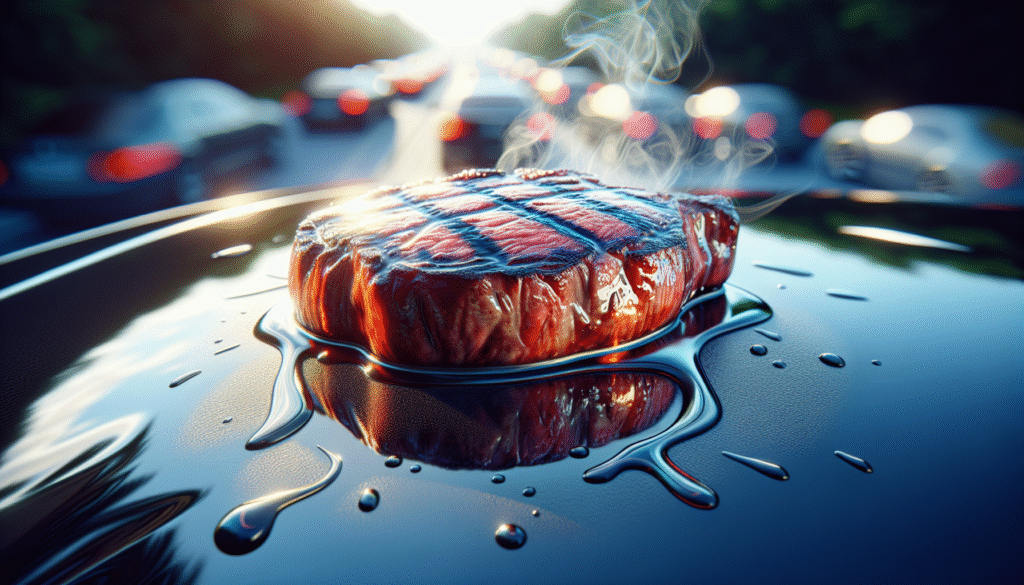
Florida Man Attempts to Cook Steak on Car Hood During Traffic Jam
This headline might make you smile, cringe, or shake your head — and you’re not alone. Incidents like this often go viral because they combine a strange stunt with public spaces and the chaos of traffic, but beyond the humor there are practical safety, legal, and health concerns you should understand if you encounter something similar.
What happened in the reported incident?
You probably already have an image in your mind: traffic stalled, someone places a raw steak on the warm hood of a car, and onlookers record with their phones. In many such cases, these moments are captured on social media, prompting discussions that range from lighthearted jokes to serious criticism about safety and legality.
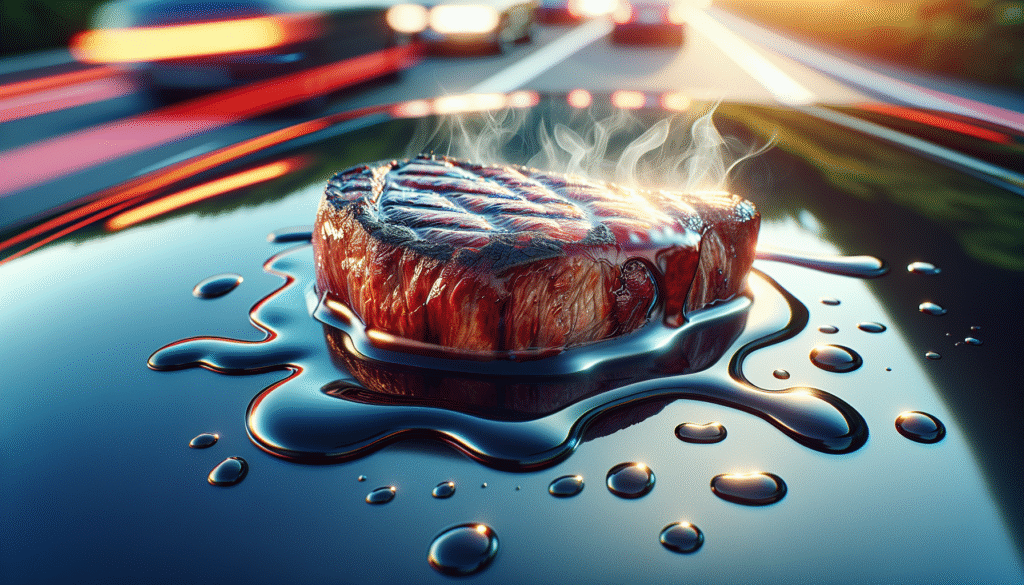
The specifics vary by incident, but typical elements include a long traffic jam, a visibly hot car hood (often dark-colored and parked in full sun), and a person attempting to sear or cook meat using the vehicle’s surface heat. Bystanders often respond with amusement and concern, and law enforcement may become involved if the behavior endangers others or obstructs traffic.
How did the situation usually unfold?
When you see a viral clip of someone trying this, you’re seeing a condensed version of events. Typically the scenario begins with frustration or boredom during a prolonged traffic stoppage, followed by a spontaneous decision to try something unusual — sometimes for attention, sometimes out of curiosity about how hot a hood can get.
People nearby might laugh or scold, and many take out phones to record. If the stunt causes a traffic obstruction, creates a mess, or seems reckless, someone will likely call authorities. Police may respond to complaints about dangerous behavior or public nuisance, and social media amplifies the incident quickly.
Why would someone try to cook on a car hood?
You might wonder what motivates a person to attempt this. A few common drivers (no pun intended) are curiosity about how hot metal surfaces can get, boredom and the desire to break monotony during a long jam, a desire for attention or to create viral content, or a misunderstanding of how safe or effective it is to cook on a painted surface.
Cultural and environmental factors matter too: in very hot climates like parts of Florida, people sometimes use heat creatively for tasks normally reserved for controlled cooking devices. That doesn’t mean it’s a good or safe idea — it just helps explain the impulse.
Psychological and social motives
If you were the person attempting this, you might be trying to turn a dull moment into a memorable one. Social media incentives — likes, shares, and a quick burst of notoriety — can motivate riskier behavior than you’d normally consider acceptable.
Group dynamics also matter: a crowd can encourage someone to continue a stunt even after they realize the risks. If bystanders laugh or cheer, the behavior can escalate rather than stop.
Can a car hood actually get hot enough to cook a steak?
Yes and no — a car hood can reach temperatures high enough to sear the outside of a steak under the right conditions, but reliably cooking a steak through to a safe internal temperature on a car hood is unlikely and unsafe. The metal can become very hot in direct sun, particularly if the ambient temperature is high and the car color is dark. However, the heat distribution is uneven, and you can’t control factors like wind, shade, or sudden movement.
Cooking a steak properly requires consistent, controllable heat to bring the internal temperature to a safe level (for beef, at least 145°F/63°C for medium rare per many guidelines, though many prefer higher). A hood might sear the exterior but leave the interior undercooked, increasing the risk of foodborne illness.
How surface heat works on a car hood
When sunlight hits the hood, the paint absorbs radiant energy and transfers heat to the metal. Dark colors absorb more heat; glossy paint can both reflect and radiate heat differently. Metal conducts heat quickly, but irregularities in hood shape, vents, and paint thickness create hot and cold spots. Wind and moving traffic can cool the surface unpredictably.
You can measure surface temperature with an infrared thermometer. That tool will show surface temp but not the temperature inside the meat. Surface searing doesn’t guarantee internal doneness.
Surface temperature estimates for car hoods
You might find it useful to know typical surface temperatures so you understand the limits. The following table gives rough ranges for surface temperature under direct sun for different ambient conditions and vehicle colors. These are approximations; real-world results vary widely.
| Ambient Temp (°F / °C) | Car Color | Typical Hood Surface Temp Range (°F / °C) | Notes |
|---|---|---|---|
| 70°F / 21°C | Light | 120–160°F / 49–71°C | Slightly warm, unlikely to sear meat |
| 70°F / 21°C | Dark | 140–190°F / 60–88°C | May sear surface over time |
| 90°F / 32°C | Light | 150–210°F / 65–99°C | Better for searing, variable |
| 90°F / 32°C | Dark | 180–240°F / 82–116°C | Searing likely; uneven heat |
| 100°F / 38°C | Dark | 200–260°F / 93–127°C | Strong searing potential; hot enough for browning |
| 100°F / 38°C | Light | 170–220°F / 77–104°C | Variable; may produce exterior browning |
These ranges are rough. If you want precision, you would use an infrared thermometer for the surface and a probe thermometer for the meat’s internal temperature.
What temperature do you need to safely cook steak?
For safety and quality:
- For whole cuts of beef (steaks, roasts): USDA recommends a safe minimum internal temperature of 145°F (63°C), followed by a rest time of at least 3 minutes.
- For ground beef: 160°F (71°C) recommended due to increased risk of contamination throughout the meat.
- Many chefs prefer medium-rare steaks around 130–135°F (54–57°C), but that’s below USDA guidance and carries more risk for some individuals.
A hood might sear the outside at higher surface temps, but getting the interior up to a safe temperature takes time and a consistent heat source.
Food safety and health risks
You’d want to consider several food safety issues before trying to cook on a car hood. Besides the challenge of achieving a safe internal temperature, there’s contamination risk from paint, metal treatments, bird droppings, road grime, and oils. You can’t control sanitation on a hood the way you can in a kitchen.
Toxins from charred paint or vehicle residues could end up on the meat. Additionally, uneven cooking increases the risk of foodborne pathogens surviving. If you plan to eat food prepared in non-food-grade settings, your risk of gastrointestinal illness goes up.
Chemical contamination concerns
Car hoods are coated with automotive paint and often treated with waxes or sealants. Heat can cause volatile organic compounds (VOCs) to off-gas or create residues that transfer to food. Metals in paint or environmental particulates from exhaust and brake dust may contaminate the surface. None of these are intended to be food-safe, and you can’t clean a hood to kitchen standards in a traffic jam.
Vehicle damage and safety risks
If you’re considering this as a stunt, remember: cooking on a hood can damage the vehicle. High heat can blister or discolor paint, warp thin metal, or damage the clear coat. Spilled grease and juices can stain, attract animals, or create slippery surfaces if left behind. In extreme cases, an open flame or hot grease near vehicle parts could start a fire.
You also risk creating distractions for other drivers, increasing the chance of collisions. Obstructing lanes to set up or leaving a car unattended to tend to food can be illegal and dangerous.
Practical vehicle consequences
- Paint discoloration and blistering
- Warping or surface damage if heat is prolonged
- Messy residues that are hard to remove
- Potential to cause a traffic hazard if the driver becomes distracted
Legal consequences and traffic safety
You need to think about laws and ordinances. City, county, and state regulations often have provisions about public nuisance, littering, disorderly conduct, and obstructing traffic. If your stunt interferes with emergency vehicles or blocks lanes, charges could become more serious.
Law enforcement response varies by jurisdiction and the specifics of the situation. In some cases, officers might issue a warning; in others, they may write a citation or make an arrest if the behavior is judged reckless, hazardous, or criminal (for example, if it creates a fire hazard or blocks traffic).
Possible charges and penalties (general examples)
The following table outlines categories of possible legal responses and the kind of penalties you might face. Laws differ widely; consult local statutes or a lawyer for specifics.
| Potential Charge/Violation | Typical Description | Possible Penalties (Varies by Jurisdiction) |
|---|---|---|
| Obstructing traffic | Blocking lanes or creating hazards | Fines, vehicle towing, citations |
| Public nuisance / disorderly conduct | Behavior endangering public safety or causing alarm | Fines, community service, misdemeanor charges |
| Littering | Leaving food scraps, grease, or trash | Fines, cleanup orders |
| Reckless endangerment | Actions creating significant risk of harm | Misdemeanor or felony charges in severe cases |
| Open flame ordinance violation | Using burners/grills where prohibited | Fines, confiscation of equipment, citations |
You should assume that deliberately creating a traffic hazard could attract at least a fine and a stern lecture from law enforcement.
How police and emergency services typically respond
If a call comes in, police will assess the immediate risk. They may instruct the person to stop, remove the food, or move to a safer area. If the activity causes an active hazard — for instance, if a passing car hits the person or a small fire starts — emergency services will prioritize public safety and may make arrests or issue citations.
You should cooperate with officers and follow instructions promptly if you’re involved or a witness. If the person cooking refuses to comply and continues to create danger, police intervention will escalate accordingly.
Environmental and public health considerations
Beyond immediate safety and legality, cooking on a car hood in public spaces can have environmental impacts. Food waste and grease left on roads can attract pests and wildlife, which may create additional hazards. Food residues wash into storm drains during rain, potentially affecting local waterways. Smoke and particulate matter from charred meat or burning residues can affect air quality, especially in congested areas.
You’d be wise to consider the broader consequences of seemingly small actions in public spaces.
Alternatives to cooking on a car hood
If your goal is to have a hot meal during travel or in a traffic jam, there are safer and more practical alternatives. Preparing ahead, using portable and approved cooking equipment, or choosing shelf-stable options will reduce risk and make your experience more enjoyable.
The table below lists common alternatives and their pros and cons.
| Alternative | Pros | Cons |
|---|---|---|
| Pre-cooked or cold meals (sandwiches, salads) | Safe, no cooking required, quick | Limited variety, needs refrigeration for perishables |
| Insulated cooler with frozen gel packs | Keeps food cold for hours, reduces spoilage | Needs ice/gel packs, bulkier |
| Portable butane/propane camping stove (approved) | Real cooking control, designed for outdoor use | Requires space, fuel canisters, local restrictions |
| Electric car power inverter + electric hot plate | Controlled cooking, less open flame | Requires battery/inverter, can drain car battery |
| Thermal cooker / insulated pot (haybox-style) | Slow-cooks safely without constant power | Needs pre-heating/time, planning required |
| Solar oven (portable) | Uses sun, no fuel | Slow, weather-dependent, not ideal for traffic jams |
| Small tabletop grill for tailgates (approved models) | Proper grilling experience, designed for food | Not usable on hoods; requires space and rules compliance |
Choosing the right option depends on how long you expect to be stuck, local regulations, and safety considerations. For short delays, pre-made meals and coolers are the most practical.
Tips for safer on-road eating
If you plan to eat in a car or on the roadside, follow these guidelines:
- Keep perishable food refrigerated or in an insulated cooler with ice packs.
- Use disposable or easy-to-clean utensils to avoid cross-contamination.
- Bring hand sanitizer and wipes to clean surfaces and hands.
- Use a probe thermometer to verify internal temps for hot foods if you cook.
- Never leave food or packaging behind; dispose of waste properly.
- Avoid open flames or grills in congested or restricted areas.
Safe cooking guidelines if you’re outdoors or camping
You might have camping gear in your vehicle that can provide a safe cooking method if you’re stuck and expect a long delay. Use approved camping stoves on stable, level ground and at least several feet away from vehicles and flammable materials. Always follow fuel manufacturer instructions and local rules regarding open flames.
When you cook outdoors, be mindful of:
- Proper ventilation (never operate stoves in enclosed spaces like inside the car).
- Fire safety equipment (have a small extinguisher or water ready).
- Cleanliness and storage to prevent animals being attracted.
How to handle it if you see someone cooking on a car hood
If you witness this behavior, your response should prioritize safety. If the person seems to be creating an immediate hazard — for example, standing in traffic lanes, using a flame, or causing a vehicle obstruction — call local non-emergency police or, in more dangerous situations, emergency services.
Approach with caution if you choose to talk to them. You might politely point out the safety issues and suggest alternatives like moving to a rest area or using pre-cooked options. Recording the incident with your phone is common, but consider whether footage could escalate the situation or invade privacy; be mindful of local laws about recording.
Steps you can take
- Observe from a safe distance and assess risk.
- If immediate danger exists, call emergency services.
- If safe, mention potential hazards to the person in a calm manner.
- Encourage cleanup to prevent littering or attracting wildlife.
- If appropriate, advise the person about safer alternatives.
Social media, virality, and public perception
You’d notice that such stories often become memes or trending clips. Social media amplifies unusual behavior quickly, sometimes turning minor stunts into national or international talking points. That attention can have real consequences for the people involved, including job impacts, stigma, or legal scrutiny.
Consider how you would feel if a brief lapse in judgment became a permanent viral record. That’s a reason to act cautiously and think about the broader implications before attempting stunts in public.
Similar examples and historical context
This isn’t the first time people have used unconventional heat sources in public. There are documented instances of using car roofs to warm food, people using radiators or sidewalk grates in extreme conditions, and many more examples of improvised food heating. Sometimes these stem from necessity (e.g., power outages), but often they’re for novelty or social media content.
Cultural anecdotes and news reports show a continuum from practical to theatrical; your assessment of risk and social responsibility should guide your behavior.
Healthier approaches to food safety on the go
If you find yourself frequently eating on the road, you’ll benefit from planning. Pack foods less prone to spoilage (nuts, jerky, canned items, vacuum-sealed meals), invest in a high-quality cooler, and consider a compact alcohol-free hand sanitizer and small first-aid kit. Food thermometers and insulated containers will help maintain safe temperatures without resorting to risky improvisations.
Quick packing checklist
- Insulated cooler with ice packs
- Reusable utensils and napkins or wipes
- Hand sanitizer or biodegradable soap for cleaning
- Food thermometer (compact)
- Small trash bag for proper disposal
- Non-perishable, ready-to-eat items for emergencies
Final takeaway: think safety, legality, and sanitation
If you’re tempted to try something like cooking a steak on a car hood, consider this: the hood might get hot enough to sear the surface, but it’s unlikely to deliver safe, even cooking, and it introduces chemical, sanitary, and legal risks. The small novelty value isn’t worth potential fines, vehicle damage, health problems, or creating a traffic hazard.
Plan ahead for travel, keep safe food options on hand, and choose approved cooking methods if you must prepare food outside. If you see someone attempting this, prioritize safety when intervening and remember that quick fame on social media often comes with consequences.
If you’d like, you can ask for a specific list of portable cooking equipment that’s legal, safe, and compact for keeping in your car — that way you’ll be prepared next time a traffic jam threatens to ruin your meal plans.