
Would you consider using a flamethrower to clear ice from your driveway?
Florida Man Arrested for Using a Flamethrower to Defrost Driveway
You’ve probably seen a few outlandish news headlines, but this one raises practical and legal questions you might not have thought about. Recently, a Florida man was arrested after using a flamethrower to defrost his driveway, and the incident highlights safety, legal, and neighborhood concerns that could affect you if you ever think about unconventional ways to solve routine problems.
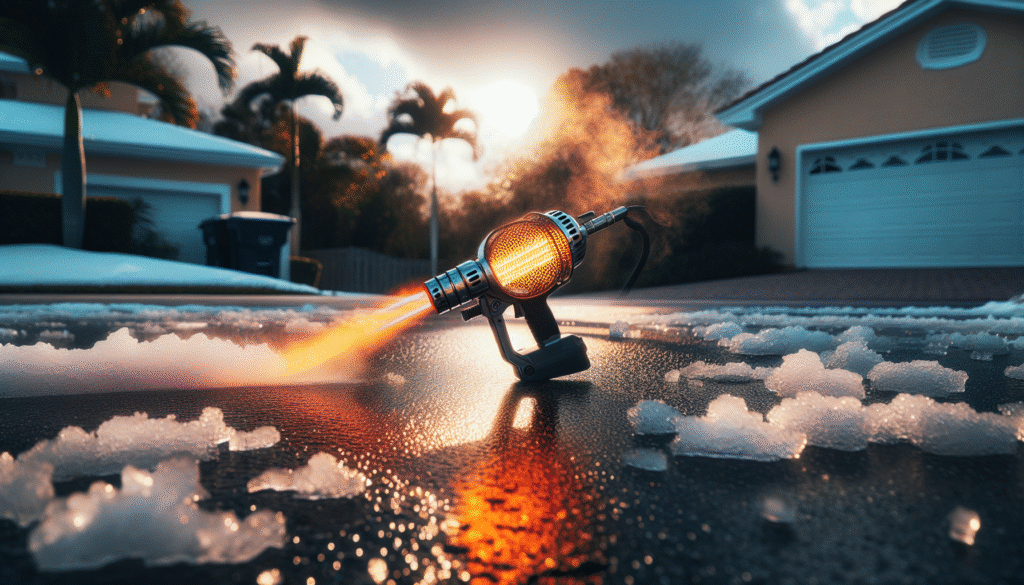
What happened
You’ll want a clear summary before you decide how you feel about this. In this incident, local authorities responded after a resident reported that someone in the neighborhood was using an open flame device on a residential driveway, prompting police and fire-rescue attention and an arrest.
You should understand that whether you find the action reckless, humorous, or alarming, first responders treated it as a public-safety issue. The presence of open flames near houses, cars, and vegetation created potential hazards that required immediate intervention.
Where and why this matters to you
This is not just a quirky headline — it’s a reminder that individual actions you might view as practical can have broader consequences. If you live in a community with close homes, power lines, or dry landscaping, any flame-based solution can be dangerous.
You should consider how a small decision, like using a flame device to melt ice, could escalate into property damage, injury, or legal trouble that impacts your finances and reputation.
Why someone might use a flamethrower to defrost a driveway
You might wonder what motivates a person to use such an extreme method. The reasoning can be simple: the desire to quickly remove ice and restore safe footing or vehicle access, especially if other methods seem slow or insufficient.
You should also recognize that lack of knowledge, desperation during severe cold snaps, or the availability of novelty devices can push someone toward unsafe choices. Often, people underestimate the spread of heat and the risk to nearby materials.
How flamethrowers work — a basic primer
If you’re unfamiliar with these devices, here’s a clear overview so you can understand the risks. Flamethrowers are devices that project a controlled stream of burning fuel, typically powered by pressurized fuel tanks and an ignition system, and they come in different sizes and configurations.
You should know that even commercially sold “flamethrowers” or burner units can produce intense heat capable of igniting combustible materials, melting plastics, and damaging rubber or asphalt. They are not designed for precision, and nearby objects can catch fire unexpectedly.
Types of portable flame devices you might encounter
You’ll encounter a few kinds of heat-producing implements that people sometimes misuse. Common types include consumer-grade propane torches, improvised fuel-based burners, and novelty devices sold online as “flamethrowers.”
You should treat any device that generates an open flame with caution. Even small torches can cause significant damage, and devices marketed as “safe” can still lead to uncontrolled fires when used on flammable surfaces or near flammable vapors.
Legal landscape: are flamethrowers legal?
You may be surprised to learn that regulation around flamethrowers varies and can be confusing. There isn’t a single federal ban on flamethrowers for civilians in the United States, but state and local laws may restrict ownership, use, or discharge, and agencies can apply other laws to penalize dangerous conduct.
You should always check the specific statutes, municipal codes, and fire safety ordinances that apply where you live. Even if ownership is legal, using a flamethrower in a residential area can violate other laws such as open burning bans, local nuisance ordinances, or public safety statutes.
Key points about legal considerations
You’ll want to be aware of these broad legal points before you consider any flame-based activity. Local fire codes, state statutes about incendiary devices, and general laws against reckless behavior can all be applied.
You should assume that using a flamethrower near structures, vehicles, or vegetation is likely to attract law enforcement and could result in charges, fines, seizure of equipment, or arrest depending on the circumstances.
Table: Legal considerations at a glance
You’ll find this table helpful for a quick comparison of the different legal dimensions you should consider.
| Consideration | What it means for you |
|---|---|
| Federal regulation | No blanket federal ban; other federal laws may apply in specific contexts (e.g., weapons in certain areas). |
| State law | Varies by state; some states ban or restrict flamethrowers while others do not. |
| Local ordinances | Cities and counties can prohibit open burning, explosive devices, or create nuisance laws. |
| Fire codes | Local fire marshal and code enforcement can issue violations and stop-use orders. |
| Criminal charges | Use may lead to charges like reckless endangerment, disorderly conduct, arson, or unlawful use of a device if harm occurs. |
| Civil liability | Property damage or injuries can lead to lawsuits and insurance claims against you. |
You should keep this table as a basic checklist to guide your next steps if you’re thinking about purchasing or using any high-heat device.
Safety risks you should consider
If you’re weighing whether to use a flamethrower or similar device, think through the physical dangers first. Open flames can ignite vapors, melt plastic and rubber, damage asphalt, and cause burns to people or animals nearby.
You should also consider secondary effects like smoke that reduces visibility for drivers, heat that damages buried utilities or landscaping, and the potential for fire to spread to adjacent properties.
Environmental and property impacts
Your actions can affect more than just the target surface. Asphalt, sealants, and existing landscaping can be damaged by extreme heat, and runoff from melted ice and chemicals may carry contaminants into storm drains.
You should remember that replacing a damaged driveway or repairing landscaping can be costly, and environmental cleanup may be required if you cause a spill or burn protected vegetation.
Table: De-icing methods — pros, cons, and costs
You’ll benefit from a clear comparison when deciding how to remove ice safely. Below is a practical table with common methods ranked for effectiveness, safety, and typical cost.
| Method | Effectiveness | Safety level | Typical cost | How fast it works |
|---|---|---|---|---|
| Rock salt (sodium chloride) | Moderate | Generally safe if used properly; can harm vegetation | Low ($) | 1–3 hours for thin ice |
| Calcium chloride | High | Safe with caution; very effective at lower temps | Moderate ($$) | 30–60 minutes for thin to moderate ice |
| Sand or gravel | Low (traction only) | Very safe; no melting | Low ($) | Immediate traction; no melting |
| Hot water (controlled) | High (short-term) | Risk of re-freeze and burns; can damage driveway | Low ($) | Immediate but may refreeze |
| Heated mats or cables | High | Safe when installed correctly; requires power | High ($$$) | Continuous/fast when on |
| Shoveling or ice chipping | Moderate | Safe with physical effort; may damage surface if aggressive | Low ($) | Immediate traction; time-consuming |
| Propane torch / flamethrower | High (but hazardous) | High risk: fire, damage, legal consequences | Varied ($$–$$$) | Immediate but dangerous |
You should use this table to choose a method that balances speed with safety and long-term costs. Flamethrower-like methods are not recommended because of high hazard potential.
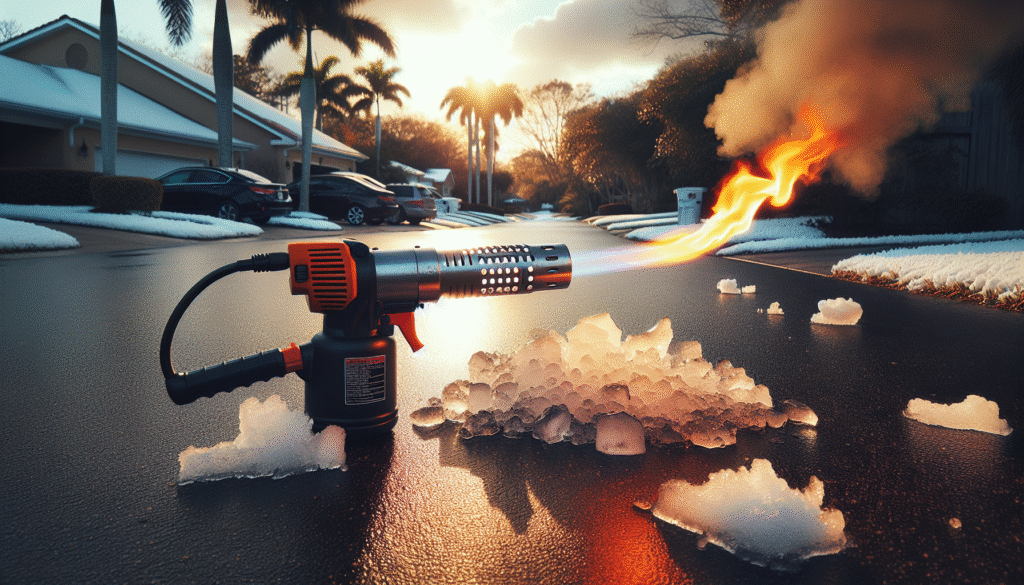
Potential criminal charges and civil liability
If you’re curious about legal exposure, know that law enforcement can charge individuals when their conduct creates a public risk. Possible outcomes can range from warnings to arrest and criminal charges depending on damage, intent, and local statutes.
You should understand that civil liability is also a real risk — neighboring property owners can sue for negligence if they suffer damage or injury because of your actions.
Table: Possible charges and what they mean
This table helps you identify the kinds of charges you could face; use it as a guide, not legal advice.
| Possible Charge | Typical circumstances | Potential outcomes |
|---|---|---|
| Reckless endangerment | Acting with disregard for human life or safety | Fines, probation, jail (severity varies) |
| Arson or attempted arson | Willful burning of property or risk of burning | Felony charges, significant fines, imprisonment |
| Open burning / fire code violation | Violating local open-burning restrictions | Fines, cease-and-desist orders |
| Disorderly conduct / public nuisance | Creating a public hazard or disturbance | Misdemeanor charges, fines |
| Property damage | Causing physical damage to another’s property | Civil damages, repair costs, possible criminal charges if intentional |
You should consult a licensed attorney if you face charges; laws and penalties vary widely by jurisdiction and specific circumstances.
Fire department and police response — what to expect
If someone uses a flamethrower and it’s reported, emergency responders will likely treat it as a potential fire hazard. Fire crews may extinguish any ignition, secure the scene, and assess for code violations; police may investigate the user’s intent and whether public safety was compromised.
You should cooperate with any on-scene instructions and provide truthful information if you witnessed the event. Interfering with emergency operations can escalate legal consequences.
What you should do if you see someone using a flamethrower in your neighborhood
If you encounter a neighbor or stranger using an open flame device near homes, vehicles, or dry landscaping, prioritize safety and responsible reporting. Keep a safe distance, avoid confrontation, and call emergency services to report the situation.
You should also collect relevant information if it’s safe to do so: time, location, description of the device and user, and any immediate hazards like sparks or visible damage. This helps first responders and can protect you if questions arise later.
Steps to take — practical and safe
You’ll want a simple checklist you can follow quickly in an emergency.
- Stay at a safe distance and move others away from the area.
- Call 911 and report the exact location and nature of the hazard.
- Avoid attempting to extinguish a large fire yourself unless you are trained and have appropriate equipment.
- If safe, record photos or video from a distance for documentation.
- Provide statements to responders if you were a witness.
You should always prioritize personal safety before property protection.
Safer, effective alternatives to flamethrowers for de-icing
You’ll likely want practical, safer methods that work. Use options that reduce ice without introducing extreme heat or legal exposure, like calcium chloride, snow-melting mats, or heated driveway systems.
You should also consider preventive measures like pre-treatment with brine solutions before a freeze, proper drainage to prevent standing water, and regular maintenance to reduce ice formation.
Detailed alternatives and how to use them
You’ll appreciate actionable steps for each safe method:
- Calcium chloride: Sprinkle according to manufacturer instructions; it works at lower temperatures and melts ice faster than regular salt. Keep pets and vegetation in mind and use protective gear when handling.
- Rock salt (sodium chloride): Effective and inexpensive for mild freezes; avoid excessive use near vegetation and concrete surfaces because of corrosion.
- Sand or grit: Provides traction without melting ice; good for immediate safe walking surfaces.
- Heated mats / cables: Install mats on steps, sidewalks, and driveways to keep surfaces clear automatically during freeze conditions. Consider the electrical load and installation costs.
- Manual removal (shoveling/ice chipping): Use ergonomic shovels and de-icing tools designed to protect surfaces. Take breaks to avoid strain and be wary of damaging asphalt or concrete with metal tools.
- Snow-melting solutions (pre-treatment): Apply liquid de-icers before a storm to prevent bonding of ice to the surface.
You should choose the method based on the severity of the freeze, the type of surface you’re treating, and safety considerations for people and pets.
If you own a flamethrower legally — safety checklist
If you legally own such a device, you’ll need a strict safety routine. Store it securely, keep fuel in approved containers, and transport it safely according to local regulations.
You should also seek training on safe operation, maintain a fire extinguisher rated for fuel and grease fires nearby, and never use a flamethrower in residential areas, near utilities, vegetation, or combustible materials.
Best practices for storage and use
You’ll benefit from these practical steps to reduce risk:
- Store fuel and the device in separate, secure, ventilated locations away from heat sources.
- Never store fuel in living spaces or near electrical panels.
- Use gloves, eye protection, and flame-resistant clothing during operation.
- Have a charged fire extinguisher and water source available when using any flame device.
- Confirm that your intended use is allowed by local laws and obtain permits if required.
You should be proactive about training and emergency planning before considering any use of high-heat equipment.
Insurance and financial consequences you should know about
A single mistake can lead to insurance claims, higher premiums, and uncovered liabilities. Homeowners insurance policies vary widely in whether they cover damage caused by intentional misuse of dangerous devices or negligent actions.
You should review your policy and talk to your insurer before undertaking any high-risk activity, because intentional or reckless acts may void coverage or lead to policy cancellation.
Community and policy responses you might expect
Following incidents like this, communities often respond by tightening rules or increasing public education. Local governments may introduce ordinances that explicitly ban flame devices in residential areas or clarify penalties for unsafe open burning.
You should stay informed about municipal code meetings and public safety announcements so you can adapt to new rules and help advocate for sensible public-safety measures.
How to talk to a neighbor who considers unusual methods
If a neighbor mentions unconventional solutions like flamethrowers, handle the conversation with calm concern rather than ridicule. Explain the risks, suggest safer alternatives, and offer help with supplies or arranging professional services if needed.
You should approach conversations with empathy: people often make risky choices out of frustration or urgency, and a supportive neighbor can help prevent dangerous outcomes.
Media and social reactions — what to expect
Stories like this attract attention online and can lead to viral posts, memes, and heated commentary. While the humor might grab headlines, the core issue remains public safety and legal compliance.
You should remember that sensational coverage can obscure the practical lessons you can learn about preventing hazards, and you can use the attention to promote awareness in your community.
Long-term prevention: education and infrastructure
You’ll make a difference by encouraging local governments and HOA boards to plan for winter weather: invest in de-icing materials, consider heated pavements in high-traffic areas, and provide community education on safe winter practices.
You should participate in or advocate for community preparedness measures that reduce the temptation for risky, improvised solutions.
If you’re charged or implicated in a similar incident
Legal consequences can be serious, and your best first step is to consult a competent attorney. Preserve any evidence that supports your version of events, avoid discussing the incident publicly, and follow legal advice carefully.
You should also document any damage, medical treatment, or costs you’ve incurred to prepare for potential civil claims or insurance discussions.
Final thoughts and practical takeaways
You’ll want these main points to remember: using a flamethrower to defrost a driveway may seem effective in the moment, but it carries significant safety, legal, and financial risks. Safer, cost-effective alternatives are widely available and far preferable for residential use.
You should always prioritize safe methods, check local laws, and contact professionals when a project exceeds your comfort or expertise. If you see dangerous behavior in your neighborhood, keep yourself safe and involve emergency services promptly.
Resources and next steps
If you want to act now to reduce similar risks in your area, start by reviewing local ordinances and fire-safety resources, buying safe de-icing materials, and sharing information with neighbors. For legal questions, consult a licensed attorney in your jurisdiction who can advise based on local laws.
You should use the incident as a prompt to assess your own winter preparedness — having the right materials and a safe plan can prevent hazardous choices and protect your home and community.